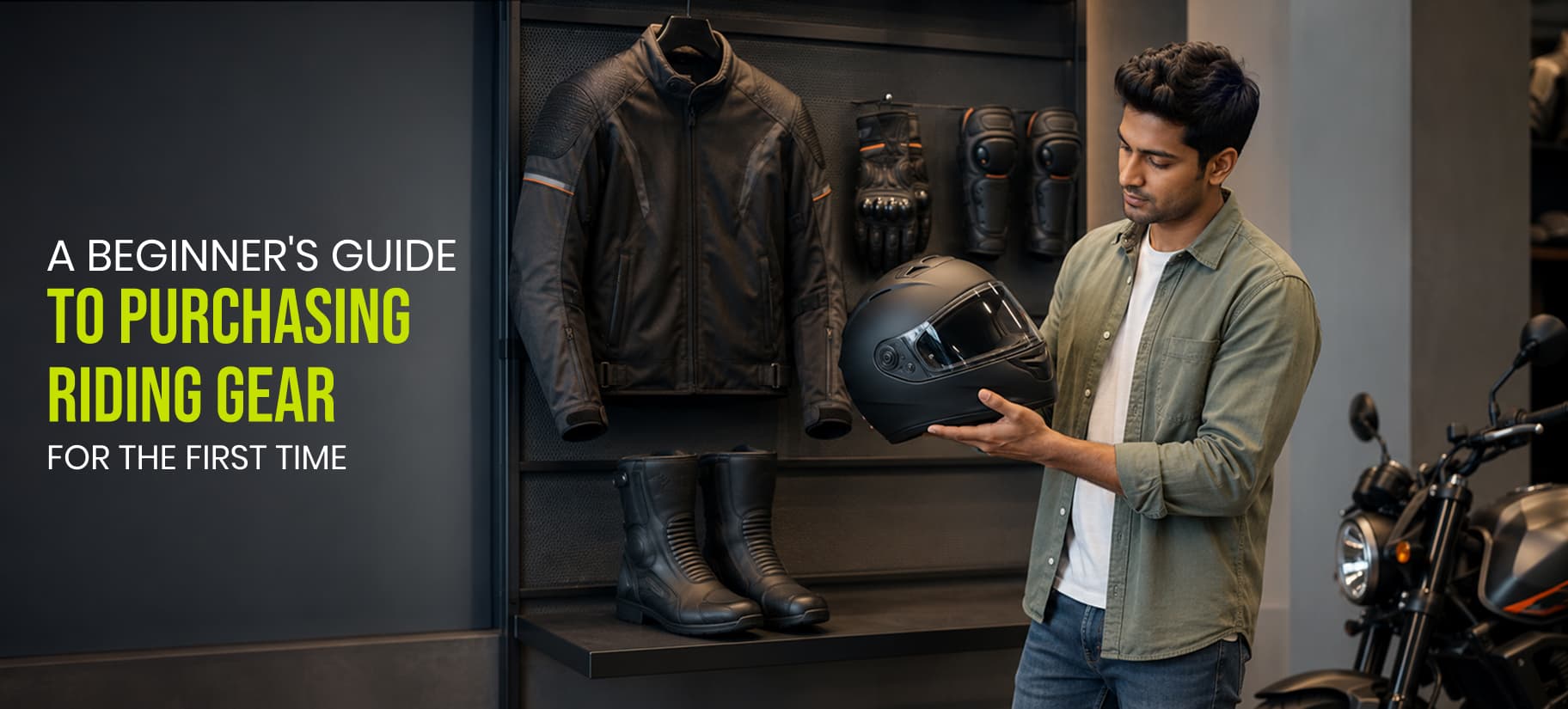
Purchasing riding gear for the first time doesn't have to be overwhelming. Start with a certified helmet, add a jacket with real armor, then gloves, and build from there in that exact order. You don't need a perfect kit on day one, but you do need the right three items before your first solo ride. Everything else can come later, as your riding evolves and your budget allows. Browse India's most complete verified gear range at Throttlein, where every category from helmets to rider protection is organized specifically for riders at every experience level.
India recorded over 21 million two-wheeler sales in 2026 (Shriram Finance, 2026), and 54,568 motorcycle users were killed in 2023 alone, largely due to not wearing helmets (MoRTH data, via AlphaFEM, 2026). At the same time, as of June 2025, there are 176 manufacturers across India holding valid BIS licences for producing certified helmets (PIB, 2025), which means quality certified gear is more accessible and affordable than it has ever been. The problem isn't availability. It's that most first-time buyers don't know what they actually need, in what order, at which price point, and how to tell the difference between gear that protects and gear that only looks like it does. This guide solves that.
Why First-Time Riders Often Get Gear Wrong
Before getting into what to buy, it's worth understanding the pattern of mistakes most beginners make. Knowing the traps in advance saves you money and keeps you safer from your very first ride.
The most common mistake is prioritizing style over certification. A jacket that looks like riding gear but carries no CE-certified armor is decorative clothing, not protection. The second most common mistake is skipping gloves entirely, treating them as optional. Your hands are statistically among the most commonly injured body parts in crashes because riders instinctively extend arms to break a fall (Spada Clothing, 2026). The third mistake is buying gear in the wrong order, spending ₹15,000 on luggage and a phone mount before owning a proper jacket.
One more thing worth saying upfront: helmet usage in India is often driven more by fear of fines than concern for safety (PIB, 2025). That mindset leads to buying the cheapest ISI sticker rather than a genuinely certified shell. This guide is for the rider who wants actual protection, not just technical legal compliance.
Understanding Gear Certifications Before You Buy Anything
Certifications are the single most important concept in your entire gear-buying journey. A certification tells you that an independent laboratory tested the product and verified it protects against specific injury scenarios. Without certification, a product is only claiming to protect you.
Here's the certification vocabulary every first-time gear buyer in India needs:
ISI (IS 4151:2015): India's mandatory helmet certification, governed by the Bureau of Indian Standards. Every helmet sold and worn on Indian roads must carry this mark. The ISI mark must be embossed or permanently printed on the shell, never a peelable sticker. Verify the CM/L licence number on the BIS Care app or bis.gov.in before trusting any ISI mark.
ECE 22.06: The current European Union standard, stricter than ISI. Adds oblique (rotational) impact testing that ISI doesn't include. A helmet with both ISI and ECE 22.06 is the best-protected option available for Indian roads.
CE Level 1 and Level 2: The certification system for jacket armor, knee guards, hip protectors, and back protectors. Level 1 is the minimum standard. Level 2 absorbs more impact energy and is recommended for any rider spending time above 60 km/h. Look for the CE mark sewn into the actual armor insert, not just printed on the jacket's outer label.
IP Rating (IP67, IP65): Relevant for electrical accessories like lights and Bluetooth devices. IP67 means the product survives submersion to one metre for 30 minutes. Essential for Indian monsoon conditions.
What to Buy First: The Non-Negotiable Starter Kit
Every first-time rider in India needs exactly five items before their first ride. In this order.
1. A Full-Face ISI-Certified Helmet
A full-face helmet is the correct choice for every first-time rider. Open-face and half-face helmets leave the chin and jaw exposed, and the chin bar of a full-face helmet is where a significant proportion of real-world impact forces land in crashes. For a new rider who is still developing hazard awareness and reaction times, maximum coverage is the right starting point.
ISI certification is legally mandatory. Beyond the legal minimum, look for helmets also carrying ECE 22.06 for better tested protection, especially for any riding above city speeds.
How to check fit before buying: Measure your head circumference 2.5 cm above your eyebrows using a soft tape measure. Match the number to the brand's specific size chart, not generic size labels. Try the helmet for at least 10 minutes. It should feel snug all around with no pressure points. When you grip the chin bar and try to rotate the helmet side to side, it should barely move independently of your head.
Price guide:
Budget (₹1,200 to ₹3,500): ISI-certified full-face from Studds or Steelbird. Legal, protective for city speeds
Mid-range (₹3,500 to ₹8,000): ISI plus ECE from Axor, SMK, or LS2. Better ventilation, lighter shell, more padding
Premium (₹8,000 to ₹20,000): ISI plus ECE 22.06 from LS2 Carbon, MT Helmets, or Shoei. Sub-1,400 gram shells, multi-channel ventilation, Pinlock anti-fog standard
Browse verified ISI and ECE-certified helmets across all price ranges at Throttlein's helmets and accessories section.
2. A Riding Jacket with CE-Certified Armor
Your jacket is your second line of defense after your helmet. It protects your shoulders, elbows, arms, and back in a slide or fall. A regular denim jacket or leather fashion jacket offers zero certified protection. A proper riding jacket has CE-certified armor inserts at the shoulders, elbows, and a back protector slot.
For first-time buyers in India, a mesh jacket with CE Level 1 armor is the most practical starting point because it's wearable in Indian summer heat without becoming unbearable. If you plan to ride through the monsoon, look for a jacket with a removable waterproof membrane.
What to check in the jacket:
CE Level 1 or Level 2 armor at shoulders and elbows (check the actual insert, not just the label)
A back protector pocket or slot (upgrade from foam insert to CE-rated back protector when budget allows)
Abrasion-resistant outer fabric (mesh panels in the body, reinforced panels at the shoulders and elbows)
Adjustable cuffs and waist to ensure armor sits on the right impact zone, not shifted by fit issues
Reflective panels for night visibility
Price guide:
Budget (₹2,500 to ₹5,000): BBG Motor Jacket, Rynox Air GT. CE Level 1, basic mesh
Mid-range (₹5,000 to ₹9,000): Rynox Tornado Pro, ViaTerra Corsa. Better coverage, removable liner
Premium (₹9,000 and above): Axor Hawk, Dainese Air Fast. CE Level 2 option, technical fabrics
Browse CE-certified riding jackets on Throttlein, organized by riding type so you find the right style without sifting through irrelevant options.
3. Riding Gloves with Knuckle Protection
Gloves are the item most beginners skip or underinvest in. Don't. Your hands extend instinctively in a fall, and bare palms and knuckles on tarmac at even 30 km/h cause deep, painful abrasions that can involve tendons. CE-certified riding gloves with hard knuckle guards, palm sliders, and wrist retention straps are available from ₹800 upward.
For first-time buyers, a pair of short CE-certified summer gloves in the ₹1,500 to ₹3,000 range covers everyday riding. Touring gauntlet gloves that extend over the jacket cuff and seal the gap are worth upgrading to once you start longer rides.
Find certified riding gloves in the rider protection section on Throttlein, alongside knee guards, back protectors, and body armor.
4. Knee Guards
Your knees are exposed in almost every type of low-speed crash. CE Level 1 soft-shell knee guards that slip under riding pants or jeans are available from ₹800 to ₹1,500 and provide real impact protection without adding bulk. Hard-shell CE Level 1 and Level 2 options from brands like Rynox Bastion and Fox Titan Race offer more coverage for riders who venture onto uneven roads or unpaved tracks.
5. A Secure Phone Mount
Navigation by phone is how most Indian riders find their way, and reaching into a jacket pocket while moving is a genuine hazard. A vibration-dampening phone mount with a secondary safety tether that attaches to your handlebar keeps navigation visible at eye level and both hands on the bars. This is safety equipment, not just an accessory. Verified phone mounts suited to Indian bike handlebars are available in the mobile holders section on Throttlein.
How to Choose Your Helmet Type as a Beginner
As a first-time buyer, you'll encounter five helmet types in the market. Here's how to read each one:
Helmet Type | Coverage | Best For Beginners? | Price Range (India) |
Full-face | Head, chin, jaw, face | Yes. Maximum protection | ₹1,200 to ₹20,000+ |
Modular (flip-up) | Full-face when closed | Yes, for glasses wearers | ₹3,500 to ₹18,000 |
Open-face (3/4) | Head, sides, back only | Limited. No chin protection | ₹1,000 to ₹8,000 |
Half-face | Top of head only | No. Minimum legal cover only | ₹800 to ₹3,000 |
Dual-sport/Adventure | Full-face with peak visor | Yes, for off-road or adventure bikes | ₹4,000 to ₹25,000 |
The recommendation for every first-time buyer is a full-face helmet. No exceptions. Once you have experience, you can choose based on your riding style. Without experience, full-face coverage is the rational choice.
What Does Fit Actually Mean for Each Gear Item?
Fit is where most beginner purchases go wrong, even when the rider buys the right category. Armor that has shifted away from the impact zone because of poor fit provides significantly less than its certified protection level.
Helmet fit: Snug all around, no gap at the forehead, no pressure points after 10 minutes of wear, doesn't rotate more than 2-3 cm when gripped and moved.
Jacket fit: Shoulder armor should sit on your shoulder cap, not behind or in front of it. Elbow armor should sit over your elbow, not on your forearm or upper arm. With arms in riding position (slightly bent, hands forward on bars), the sleeve length should keep armor in the right position without pulling.
Glove fit: Snug across the knuckles with no material bunching inside. Fingers should reach full length without the glove feeling tight. The wrist strap should fasten comfortably over your jacket cuff to seal the gap.
Knee guard fit: The hard cap should center over the kneecap, not drift above or below it when you bend and extend your leg fully. Velcro straps should hold it in position across a full range of motion.
The 5 Gear Mistakes Every First-Time Buyer Should Avoid
Mistake 1: Buying style-forward gear without checking certification A jacket with no CE-certified armor sewn in is a fashion item, not protective equipment. Always check the actual armor insert for a CE Level 1 or Level 2 marking. If no insert is present, keep looking.
Mistake 2: Choosing a helmet based on price alone A ₹400 roadside helmet with a printed ISI sticker that can be peeled off is counterfeit and structurally unsafe. Always verify the CM/L licence number using the BIS Care app. The minimum safe investment in an ISI-certified full-face helmet is around ₹1,200 from a verified brand.
Mistake 3: Skipping gloves because "it's just a short ride" Most road incidents happen close to home, on familiar routes, at low speeds. Gloves weigh under 300 grams and take 10 seconds to put on. There is no commute short enough to make them unnecessary.
Mistake 4: Buying gear in the wrong order Crash guards for your bike before a jacket for your body. A Bluetooth communicator before knee guards. These are real patterns. Your body is protected before your bike. Certify your own safety first.
Mistake 5: Buying gear that is too loose or too tight New riders often size up thinking looser is more comfortable. Loose armor rotates in a crash and covers the wrong body parts at impact. Gear that's too tight restricts movement and leads to sweating, discomfort, and the habit of not wearing it. Measure and verify fit before purchasing.
Building Your First Gear Kit by Budget
Here's a realistic, India-specific budget breakdown for assembling your first complete beginner kit from scratch:
Starter kit (₹8,000 to ₹15,000): Legal, safe, wearable every day
ISI full-face helmet (₹1,500 to ₹3,500): Studds, Steelbird, Vega
CE Level 1 mesh riding jacket (₹2,500 to ₹5,000): BBG, Rynox Air GT
CE-certified gloves (₹800 to ₹1,500): BBG, Cramster
CE Level 1 soft-shell knee guards (₹800 to ₹1,500): BBG Knee Guard, Axor Pro
Phone mount (₹400 to ₹800): Universal mount with tether
Confident beginner kit (₹15,000 to ₹28,000): Better protection and everyday comfort
ISI plus ECE dual-certified full-face helmet (₹4,000 to ₹7,000): Axor, SMK, LS2
CE Level 1 textile jacket with removable liner (₹5,000 to ₹9,000): Rynox Tornado Pro
CE-certified gauntlet gloves (₹1,500 to ₹3,000): Rynox Urban, Cramster Excite
CE Level 2 hard-shell knee guards (₹1,500 to ₹3,500): Rynox Bastion
CE Level 1 back protector insert (₹800 to ₹1,500): Upgrade from foam insert
Phone mount with vibration dampening (₹800 to ₹1,500)
Full protection kit (₹28,000 to ₹55,000): Closest to no compromises
ISI plus ECE 22.06 full-face or modular helmet (₹7,000 to ₹15,000): LS2, MT Helmets
CE Level 2 all-season textile jacket (₹10,000 to ₹20,000): Rynox Stealth Pro, ViaTerra Leh
CE Level 2 touring gauntlet gloves (₹3,000 to ₹6,000)
CE Level 2 knee guards (₹3,500 to ₹8,000): Leatt 3.0, POD K8
CE Level 2 back protector (₹1,500 to ₹3,000): D3O Viper Pro
Phone mount with GPS bracket (₹1,500 to ₹3,000)
All verified certified options across these tiers are available through Throttlein, India's dedicated motorcycle accessories marketplace where every seller is verified and every listing displays real certification details.
What to Add Next: Your Second Round of Gear Purchases
Once your core five items are covered, here's what makes the most sense to add next, based on how your riding expands:
If you start riding longer distances: Add a riding backpack or tank bag for daily carry. A 20-25 litre waterproof backpack with a chest strap stays on your back in a fall and keeps your hands free.
If you start riding at night or in monsoon: Add LED auxiliary lights for better visibility on unlit roads. For monsoon riding specifically, a dedicated rain suit in addition to a waterproof jacket liner covers you when the weather turns unexpectedly.
If your bike is prone to parking lot tips or kerb contact: Add crash guards and bike protection to protect your engine casing and frame at the low-speed contact points that are most common in the first year of riding.
If you ride with other people or use navigation heavily: A Bluetooth communicator lets you receive navigation audio and calls through your helmet without stopping or handling your phone. Entry-level single-unit systems start from ₹2,500 to ₹3,500.
How to Verify Your Gear Is Genuinely Certified Before Buying Online
Online shopping makes gear accessible from anywhere in India but also creates exposure to fake certification claims. Here's how to verify before any purchase:
For helmets:
Confirm the listing displays a CM/L licence number alongside the ISI mark
After receiving, open the BIS Care app (free on Android and iOS) and enter the number
Verify the manufacturer name and helmet model match the registered licence
Check that the ISI mark is embossed or permanently inked on the shell or liner, not a peelable sticker
For jackets and body armor:
Check that CE Level 1 or Level 2 marking is on the actual armor insert, not only on the jacket's hang tag
The insert should have a manufacturer's label showing the standard (EN 1621-1 for limb armor, EN 1621-2 for back protectors) and the rating level
A foam insert with no CE marking is not rated protection, regardless of what the jacket label says
For electrical accessories:
Confirm the IP rating in the product listing matches what you need (IP67 for monsoon use)
Check that the voltage and wiring connector type match your bike's electrical system spec
Buying from Throttlein reduces this verification burden significantly because every seller is pre-verified in category, and listings are required to display genuine certification details before going live.
Conclusion: Your First Gear Kit Is a Safety Decision, Not a Shopping Trip
The single most important thing to remember from this entire guide is one sentence: purchasing riding gear for the first time is a safety decision, and the order in which you buy matters as much as what you buy.
Helmet first. Jacket second. Gloves third. Knee protection fourth. Phone mount fifth. Everything after that, from luggage to lighting to Bluetooth, makes riding more convenient and enjoyable. But the first five items are what you actually need to ride safely. Build in that sequence regardless of budget.
India's two-wheeler market is the largest in the world and it's still growing. More riders are on Indian roads every year. Safety awareness is improving, government mandates are tightening, and the quality of certified gear available at accessible price points has never been better. A beginner today has access to ISI plus ECE dual-certified helmets from ₹4,000 and CE Level 1 certified jackets from ₹2,500. There is no compelling reason to ride with uncertified gear in 2026.
Your starting point is straightforward. Choose a full-face ISI-certified helmet that fits correctly and verify its CM/L number. Add a jacket with real CE-certified armor at shoulders, elbows, and back. Put on your gloves every single time you ride. From there, build your kit ride by ride, budget by budget.
Start your gear kit today at Throttlein, where every product is verified and every category is built for riders exactly like you. Begin with helmets, add your jacket and rider protection, then grow your kit with bags, bike protection, and lighting as your riding expands. Every piece of gear you buy on Throttlein is one less question mark about whether it actually protects you.