The best monsoon bike rides in India in July are the Western Ghats, Malshej Ghat, Coorg, Meghalaya, and the Sakleshpur to Agumbe belt. These routes turn green, misty, and alive with waterfalls once the rain arrives. If you want dry roads instead, ride toward Ladakh or Spiti, which sit in the rain shadow and stay clear in July.
I have ridden through three monsoons across the Ghats, and July is my favourite month to be on two wheels. The roads smell of wet earth, the traffic thins out, and every corner hides a waterfall. But monsoon riding punishes the unprepared. Wet tarmac, low visibility, and surprise potholes turn a dream ride into a hospital trip if you skip the basics. This guide covers where to go, how to ride safely, and the gear that keeps a monsoon trip fun instead of miserable. A quick note on who is writing this: Throttlein is India's online marketplace for motorcycle riders, so the gear we mention here, from helmets to rain jackets, is gear you can actually shop with us in one place. Let's get you rolling.
Why is July the best month for monsoon bike rides in India?
July is the best month for monsoon bike rides in India because the southwest monsoon is in full swing, so the hills turn lush and waterfalls run at their peak. India's southwest monsoon runs from June to September (India Meteorological Department), and by July the Western Ghats and the North East look their greenest.
There is a practical upside too. Summer crowds thin out, hotel rates drop, and the air cools down after months of brutal heat. You trade a bit of riding comfort for scenery most riders only see in photos. The catch is simple: you ride slower and you pack smarter. Do that, and July rewards you more than any dry month can.
Where to ride in July: 5 best monsoon routes
Here are five routes I keep coming back to, each with what makes it special and one honest tip.
1. Western Ghats (Maharashtra and Karnataka)
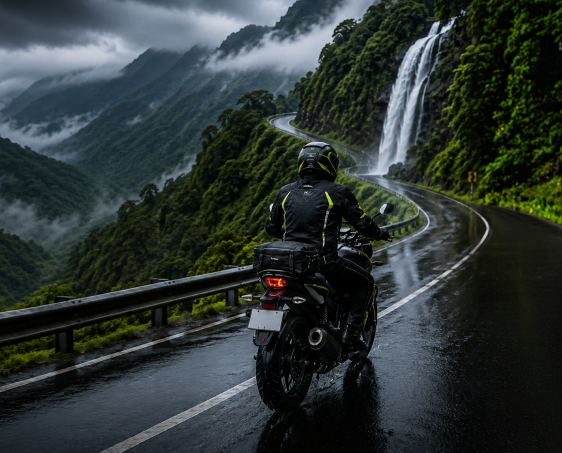
The Western Ghats are the classic monsoon ride. This mountain range runs down India's west coast, so you can join it from Mumbai, Pune, or Bengaluru. Misty passes, roadside waterfalls, and cool air stretch across hundreds of kilometres of curves.
Start with Tamhini Ghat, about 50 km from Pune, where dozens of waterfalls line a single stretch of road. Amboli, near the Maharashtra to Goa border, stays cloaked in fog all day. Bhandardara, close to Igatpuri, pairs a calm lake with green hills and old forts.
Base cities: Pune, Mumbai, or Bengaluru
Ride style: twisty ghat roads, moderate difficulty
Trip length: a weekend, or three to four days for a longer loop
Honest tip: the surface gets slick fast and leeches love the damp roadside stops. Brake early, keep a steady throttle, and watch for small landslides after heavy rain. A good pair of riding gloves makes a real difference on wet grips.
2. Malshej Ghat (Maharashtra)
Malshej is the perfect weekend escape, sitting about 130 km from both Mumbai and Pune. The ghat connects Kalyan to Ahmednagar, so it makes an easy day ride or an overnight trip. Clouds roll straight across the road, and seasonal waterfalls land on the tarmac itself.
Stop at the Malshej waterfalls, the Pimpalgaon Joga dam, and look out for flamingos that visit the area in the season. Trekkers also use this base for the Harishchandragad fort. There are a few simple resorts and MTDC stays if you want to break the ride.
Base cities: Mumbai or Pune
Ride style: short and scenic, beginner friendly
Trip length: one day, or an easy overnight
Honest tip: visibility drops in seconds when the clouds close in. Keep your headlight on and your anti-fog visor ready, and ride slow through the misty sections.
3. Coorg (Karnataka)
Coorg, also called Kodagu or the Scotland of India, is one of the most beautiful monsoon rides in the south (Royal Brothers). It sits about 250 km from Bengaluru, roughly a five to six hour ride, which makes it a great long-weekend trip. Coffee estates, green valleys, and quiet forest roads define the route.
Must-see stops include Abbey Falls in full flow, the Raja's Seat viewpoint, the Dubare elephant camp, and Talacauvery, the source of the Cauvery river. Homestays inside coffee estates are the best way to soak in the place.
Base city: Bengaluru, or Mysuru for a shorter approach
Ride style: relaxed highway plus estate roads
Trip length: two to three days
Honest tip: estate roads get muddy and wet leaves hide the surface. Ride gently on the smaller lanes, and pack a waterproof saddlebag so your luggage survives the downpours.
4. Meghalaya (North East)
Meghalaya is one of the wettest places on earth, and in the monsoon it becomes a paradise of waterfalls and living root bridges. Most riders start from Guwahati in Assam and base themselves in Shillong, the state capital. From there, Cherrapunji is about 55 km and Dawki around 80 km.
The highlights are special. Nohkalikai is India's tallest plunge waterfall. The double-decker living root bridge at Nongriat needs a steep trek but is worth it. Dawki's Umngot river runs crystal clear, and Mawlynnong is famous as Asia's cleanest village.
Base cities: Guwahati and Shillong
Ride style: long expedition, fly-and-rent or ride from the North East
Trip length: five to seven days
Honest tip: it can rain for hours without a break, and leeches appear on jungle treks. A full waterproof riding jacket is non-negotiable, and this route suits experienced riders, not first-timers.
5. Sakleshpur and Agumbe (Karnataka)
This belt is for riders who genuinely love rain. Sakleshpur sits about 220 km from Bengaluru, and Agumbe lies further west near Shivamogga. Dense rainforest, tight hairpins, and near-constant drizzle define the route. Agumbe is often called the Cherrapunji of the South for its heavy rainfall.
Ride the Bisle Ghat viewpoint, chase the Onake Abbi and Jenukallu falls, and catch the famous Agumbe sunset point on a clear evening. The whole area is thick rainforest, so the greenery is unreal in July.
Base city: Bengaluru
Ride style: narrow, twisty rainforest ghats
Trip length: two to three days
Honest tip: roads stay wet all day and the lanes are narrow with blind corners. Slow down, use your horn on bends, and wear grippy riding boots and solid rider protection.
Monsoon vs dry-weather rides: which should you pick?
Short answer: pick monsoon routes if you want green scenery and waterfalls, and pick dry routes if you want clear mountain roads and long mileage. July splits India into two riding worlds, and knowing the difference saves your trip.
The table below breaks it down.
Factor | Monsoon routes (Ghats, Meghalaya) | Dry routes (Ladakh, Spiti) |
|---|---|---|
Weather in July | Heavy rain, lush green | Dry, rain shadow |
Scenery | Waterfalls, mist, forests | Bare mountains, high passes |
Road risk | Slippery, landslides | Cold, high altitude |
Best for | Weekend and scenic rides | Long expedition rides |
Gear focus | Waterproofing, grip | Layering, warmth |
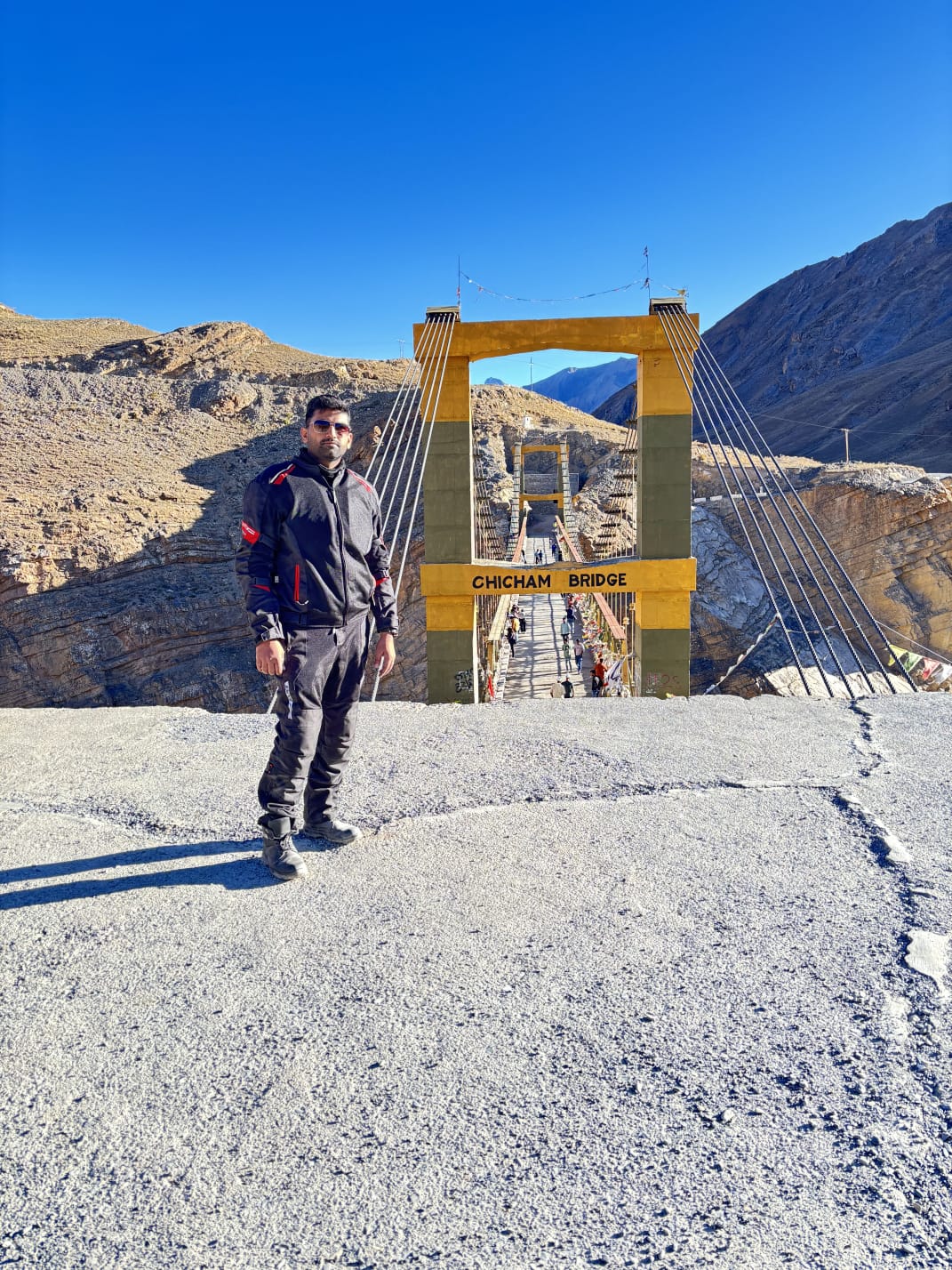
Ladakh and Spiti stay dry because the high Himalayan peaks block the monsoon clouds. So if rain is not your thing, point the bike north instead.
How do you stay safe on a monsoon bike ride?
You stay safe on a monsoon bike ride by slowing down, increasing your following distance, and keeping your tyres and brakes in top shape. Wet roads can nearly double your stopping distance, so smooth inputs and lower speed do most of the safety work.
From years of riding through the Ghats, I have learned that overconfidence causes more crashes than rain itself. Here is the checklist I run before every wet ride.
Check tyre tread and pressure. India's legal minimum tread is 1.6 mm, but replace tyres earlier for monsoon grip.
Test brakes, lights, and indicators before you leave.
Wear bright or reflective gear so other vehicles see you.
Keep a two to three second gap from the vehicle ahead, then add more in heavy rain.
Avoid riding through fast-moving or deep water on flooded roads.
Suzuki's rider guidance puts it simply: smooth and gradual throttle, brake, and steering inputs prevent loss of traction in the rain (Suzuki Motorcycle India). That one habit has saved me on more slippery corners than I can count.
What gear do you need for a monsoon ride?
You need a waterproof riding jacket, waterproof bags, an anti-fog visor, grippy gloves, and good riding boots for a monsoon ride. These five items decide whether you finish the trip dry and comfortable or cold and soaked.
Let me break down why each one earns its place. Every item below is available on Throttlein, India's marketplace for motorcycle riders, so you can compare authentic brands and order the full kit without hopping between shops.
Waterproof riding jacket
A waterproof jacket keeps your core dry, and a dry core keeps you warm and alert. Cold, wet riders make slow decisions. Look for sealed seams and vents. Browse riding jackets built for Indian rain.
Waterproof bags and rain covers
Wet luggage ruins a trip fast. Dry bags and rain covers protect clothes, electronics, and documents. A waterproof saddlebag or backpack is worth every rupee on a multi-day ride.
Anti-fog visor and helmet
Fog on your visor in heavy rain is dangerous. An anti-fog visor or a Pinlock insert keeps your view clear. Remember, helmets meeting IS 4151:2015 are legally mandatory for all riders in India (Press Information Bureau). Check helmets and accessories for monsoon-ready options.
Gloves, boots, and protection
Wet grips and slippery pegs need traction. Grippy gloves, waterproof boots, and proper rider protection round out the kit. Bright colours help here too, since visibility saves lives in the rain.
Who should attempt long monsoon rides?
Long monsoon rides suit confident riders with wet-weather experience, well-maintained bikes, and the right gear. Beginners are better off starting with short ghat runs like Malshej before committing to a region like Meghalaya.
Honesty helps here. If you have never ridden in heavy rain, do not make Meghalaya your first attempt. Build up. Ride a wet weekend route, learn how your bike behaves on slick roads, then plan the bigger trip. The mountains will still be there next July.
A quick pre-trip planning list
Before you lock in dates, run through these basics:
Check the regional forecast and landslide alerts for your route.
Service your bike, focusing on tyres, brakes, and chain.
Carry a basic toolkit, a puncture kit, and a tow rope.
Pack quick-dry clothes and a spare pair of gloves.
Save offline maps, since signal drops in the hills.
Keep emergency contacts and your insurance details handy.
Over the years, the rides that went smoothest were always the ones I planned a week ahead. Monsoon weather is unpredictable, so a little buffer time goes a long way.
Conclusion
The best monsoon bike rides in India in July reward riders who respect the rain and prepare for it. The Western Ghats, Malshej, Coorg, Meghalaya, and the Sakleshpur to Agumbe belt deliver scenery you simply cannot find in the dry season. If you would rather skip the rain, Ladakh and Spiti stay clear and open in July. Either way, the route is only half the story.
The other half is preparation. Slow down, keep a bigger gap, and check your tyres and brakes before every wet ride. Wear gear that keeps you dry, visible, and protected, because comfort and safety go hand in hand on slippery roads. A waterproof jacket, dry bags, an anti-fog visor, grippy gloves, and good boots turn a soggy gamble into a great trip.
Start small if you are new to wet riding, then build toward the bigger expeditions. Plan a week ahead, watch the forecast, and never push through flooded roads. Do that, and July becomes the most rewarding month to ride in India.
Ready for your monsoon trip? Gear up on Throttlein and shop waterproof jackets, bags, and anti-fog visors before you set off. Your next ride deserves the right kit.