To choose the right helmet for your bike, match the helmet type to your riding style, confirm it carries ISI certification (mandatory on Indian roads), check that it fits snugly with no pressure points, and pick a shell material and ventilation system suited to your daily riding conditions. That's the short version. The longer version, including the details that most buyers skip, is what this guide covers.
Knowing how to choose a helmet for a bike matters more in 2026 than it ever has. From January 2026, the Indian government mandated that every new two-wheeler sold must come with two BIS-certified helmets, one for the rider and one for the pillion (MoRTH, 2026). That mandate signals something important: helmet quality is now a government priority, not just a rider preference. India has over 25 crore registered two-wheelers, and more than 40% of road accident fatalities involve two-wheeler riders and pillion passengers (MoRTH data, 2025). The right helmet reduces your risk of death by approximately 37% and your risk of brain injury by around 67% (NHTSA, 2026). Those numbers make this buying decision worth getting right.
Why Does Helmet Choice Actually Change Your Safety Outcome?
Your helmet choice changes your safety outcome because a poorly fitted or uncertified helmet provides no meaningful protection in a real crash, even if it looks identical to a certified one. Certification and fit are the two variables that separate a life-saving piece of equipment from a false sense of security.
India's helmet market is unfortunately filled with counterfeit or non-certified products that carry fake ISI stickers and offer no actual impact absorption. In recent enforcement operations, thousands of non-compliant helmets were seized from roadside vendors across major cities (BIS enforcement, 2026). A helmet that looks official but fails at the structural level is more dangerous than wearing nothing because it creates complacency without delivering protection.
The stakes are simple: helmets are approximately 37% effective at preventing rider fatalities and 67% effective at preventing brain injuries (NHTSA, 2026). The gap between a certified helmet and a counterfeit one is the difference those percentages represent.
What Are the Main Helmet Types and Which One Suits Your Riding?
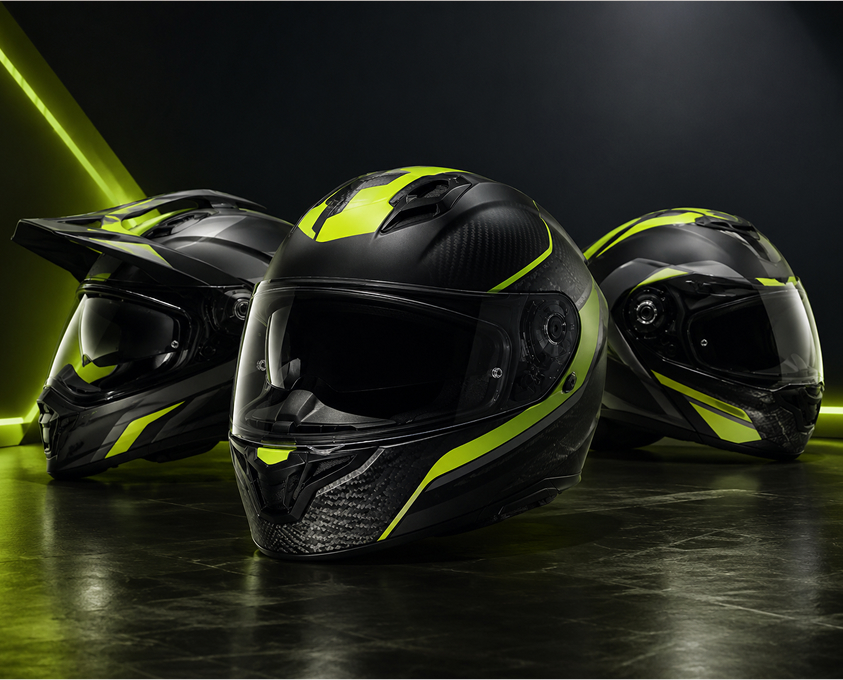
The main helmet types are full-face, modular (flip-up), open-face (three-quarter), half-face, and dual-sport. Each covers a different area of the head and face, and each suits a different type of rider and riding environment. Full-face is the safest option for highway and high-speed riding in India.
Here's how each type breaks down for Indian riding conditions:
Full-Face Helmets
A full-face helmet covers the entire head, chin, jaw, and face in one continuous shell. It's the gold standard for highway rides, touring, and anyone who regularly crosses 60 km/h. The chin bar absorbs a significant portion of crash impact. Research consistently shows full-face helmets outperform other types in frontal and rotational impact scenarios.
For daily commuting in cities like Bengaluru, Mumbai, or Delhi, full-face is still the smartest choice despite the summer heat. Brands like LS2, Axor, SMK, and Steelbird offer ISI-certified full-face helmets with solid ventilation systems designed for Indian temperatures, starting from around ₹3,500.
Modular (Flip-Up) Helmets
Modular helmets have a hinged chin bar that lifts up to allow easy access without removing the entire helmet. They're popular among city commuters, touring riders, and spectacle wearers. The trade-off is that the hinge mechanism makes the chin bar slightly less rigid than a one-piece full-face design.
If you wear glasses, use navigation apps frequently, or stop often in traffic, a modular helmet is the most practical choice. Look for ISI-certified modular helmets with a micrometric buckle retention system for a secure fit.
Open-Face (Three-Quarter) Helmets
Open-face helmets cover the skull, sides, and back of the head but leave the chin and face exposed. They're legal in India with ISI certification and popular for short-distance commuting and vintage or retro-styled bikes. They're not recommended for highway speeds because the absence of a chin bar leaves the most impact-prone area of the face completely vulnerable.
Half-Face Helmets
Half-face helmets cover only the top and sides of the head. They're ISI-certifiable and legal on Indian roads but offer the minimum possible protection. If you only use a helmet to avoid a fine rather than for actual protection, a half-face gets the job done legally. It's not a choice I'd recommend for anything beyond low-speed urban riding.
Dual-Sport Helmets
Dual-sport helmets combine the features of a full-face street helmet with an extended chin bar and peak visor for off-road protection. They're ideal for adventure riders on bikes like the Royal Enfield Himalayan, BMW GS, or KTM Adventure series. They work on highways and dirt roads equally well and are one of the fastest-growing helmet segments in India.
What Certification Should You Look for When Choosing a Helmet in India?
In India, you need ISI certification (IS 4151:2015) as the minimum legal requirement. For better protection, look for helmets that also carry ECE 22.06 certification. A helmet sold commercially in India without an ISI or BIS mark is illegal to use on public roads, regardless of international certifications it may carry.
Here's the certification hierarchy explained clearly:
Certification | What It Tests | India Legal Status | Level of Protection |
|---|---|---|---|
ISI / BIS (IS 4151:2015) | Impact resistance, penetration, retention | Mandatory for sale and use | Legal minimum |
ECE 22.06 | Linear + oblique impacts, visor penetration, chin bar | Legal for personal use with ISI | Stricter than ISI |
DOT (FMVSS 218) | Impact absorption, strap strength | Legal for personal use with ISI | Similar to ISI level |
Snell M2025 | Rigorous multi-point impact testing | Legal for personal use with ISI | Premium / racing grade |
The practical rule for Indian riders: ISI is your legal floor. ECE 22.06 is your performance benchmark. If your budget allows ₹5,000 or more, look for helmets that carry both ISI and ECE certification. Brands like LS2, Axor, and SMK now offer ECE 22.06 certified helmets at mid-range Indian price points, and they represent a meaningful safety upgrade over ISI-only options.
A critically important point about fake certifications: always check for an embossed or permanently affixed ISI mark, not a printed sticker that can be added to any uncertified shell. Verify the BIS licence number on the official BIS portal if you have any doubt about authenticity (BIS.gov.in).
How Do You Find the Right Helmet Fit?
You find the right helmet fit by measuring your head circumference, matching it to the manufacturer's size chart, then confirming the fit in person by wearing the helmet for at least 5-10 minutes and checking for pressure points, cheek pad tension, and stability during head movement.
Fit is the single most important factor in helmet safety after certification. A certified helmet that fits loosely will rotate in a crash, exposing the areas it was designed to protect. As the NHTSA puts it, a helmet should feel equally snug around the crown and firm at the cheeks, with no gaps at the forehead (NHTSA, 2026).
How to measure your head at home:
Wrap a soft measuring tape around your head approximately 2.5 cm above your eyebrows, passing over the fullest part of the back of your skull.
Note the circumference in centimetres.
Match it to the helmet brand's specific size chart (sizing varies between brands even at the same circumference).
Try the helmet on and move your head side to side and up and down. The helmet should move with your head, not independently.
Grip the chin bar or back of the helmet and try to rotate it on your head. If it rotates more than a few centimetres, it's too large.
Wear it for 10 minutes. If you develop a headache or pressure point, try the next size or a different brand with a different head shape profile.
Head shapes also matter. Most helmets are designed for an intermediate oval head shape, which is the most common. If you have a round oval or long oval head shape, specific brands fit better. In my experience reviewing helmet fit across different riders, Arai helmets tend to fit round oval heads better, while Shoei and LS2 fit intermediate oval shapes more consistently.
What Shell Material and Ventilation System Should You Choose?
Shell material and ventilation both affect long-term comfort and protection quality. For Indian riding conditions, the best combination is a polycarbonate or fiberglass composite shell (for daily riding) with at least four intake vents and two exhaust vents.
Shell material comparison:
Polycarbonate: The most common material in ISI-certified helmets under ₹5,000. Affordable, absorbs impact well, slightly heavier. Replace within 5 years of manufacture date.
Fiberglass composite: Better strength-to-weight ratio than polycarbonate. Common in mid-range helmets (₹5,000-₹12,000). Good choice for touring riders.
Carbon fiber: Lightest option, typically under 1,300 grams. Significantly reduces neck fatigue on long rides. Found in premium helmets (₹15,000 and above). Carbon fiber shows damage visibly, which is actually an advantage because you can see when a helmet has been compromised.
For Indian summers, ventilation is non-negotiable. A poorly ventilated helmet creates heat buildup that leads to sweat, discomfort, and reduced concentration on longer rides. Look for channel ventilation that draws air from the front vents through EPS foam channels and exhausts it from the rear.
Which Helmet Brands Work Best for Indian Riders?
The best helmet brands for Indian riders combine ISI certification with build quality, ventilation suited to hot and humid conditions, and a realistic price-to-protection balance. The strongest performing brands in India in 2026 are LS2, Axor, SMK, Steelbird, Studds, and Vega, with international brands like MT Helmets available through specialized retailers.
Budget guide for Indian helmet buyers:
₹1,500 to ₹3,500: ISI-certified entry-level helmets from Steelbird, Studds, or Vega. Adequate for city commuting at low speeds.
₹3,500 to ₹7,000: ISI + ECE 22.05 certified helmets from Axor, SMK, or LS2. The best value range for riders who cover significant distances.
₹7,000 to ₹15,000: ISI + ECE 22.06 full-face and modular helmets with carbon composite shells, multiple ventilation channels, and premium liner quality.
₹15,000 and above: Premium ECE 22.06 and dual-certified helmets from LS2, MT, or international brands, often with carbon fiber shells and advanced ventilation.
If you want to browse certified helmets across all these price bands in one place, the Throttlein helmets section carries verified ISI and ECE-certified models from established brands, organized by riding type and price range.
When Should You Replace Your Helmet?
You should replace your helmet every five years from the date of manufacture, or immediately after any significant impact, even if the helmet shows no visible damage. EPS foam liners compress on first impact and don't recover, meaning a helmet that looks intact after a drop or crash may no longer protect at full effectiveness.
Replace your helmet immediately if:
It has been involved in any crash, regardless of visible damage
The shell shows cracks, deep scratches, or deformation
The liner feels loose or has compressed unevenly
The retention system (buckle or D-ring) doesn't close securely
The visor no longer locks in the closed position
A useful way to think about the five-year rule: the polycarbonate shell degrades with UV exposure over time, becoming more brittle even without any physical impact. Storing a helmet in direct sunlight or in a hot car regularly accelerates this process.
Never buy a second-hand helmet unless you know its complete history. A helmet that has been in a crash and looks fine externally is structurally compromised. The savings on a second-hand lid aren't worth the risk.
Helmet Accessories That Complement Your Choice
Once you've chosen the right helmet, a few additions make it safer and more comfortable on the road:
Bluetooth communication systems for navigation audio, calls, and music without phone handling: browse Bluetooth accessories for helmets that are compatible with most major helmet brands
Pinlock anti-fog lens inserts for monsoon riding and cold weather: reduces visor fogging without affecting visibility
Helmet bags and covers for travel and storage: protect the shell from scratches and UV damage during transport
Neck gaiters and balaclavas to seal the gap between your jacket collar and helmet base, especially important for highway riding
You can find compatible accessories for your specific helmet model at Throttlein, India's dedicated marketplace for verified rider gear.
Conclusion: The Right Helmet Is a Decision Worth Taking Seriously
The core principle behind everything in this guide is one sentence: the right helmet for your bike is the one that's certified, fits your head correctly, and suits the actual conditions you ride in, not the one that looks the best at the shop counter.
From January 2026, India's government is requiring two BIS-certified helmets with every new two-wheeler sale. That policy shift reflects a serious national push toward reducing rider fatalities, but the law only sets a floor. What you actually wear on your head determines how much protection you get above that floor.
For daily city commuting, a well-fitted ISI-certified full-face helmet in the ₹3,500 to ₹6,000 range from a brand like Axor, SMK, or LS2 is the right starting point. For touring or adventure riding, step up to ECE 22.06 certification and invest in weight and ventilation. For new or younger riders, fit precision matters more than brand or price.
Don't buy a helmet based on price alone or certification sticker alone. Put it on, wear it for 10 minutes, check that it doesn't rotate when you try to move it, and make sure there are no pressure points. That 10-minute test is the most important part of the entire buying process.
When you're ready to browse verified ISI and ECE-certified helmets from established brands, the Throttlein helmets and accessories section is the best place to start. Every helmet listed there is from a verified brand with genuine certification. You'll also find Bluetooth communicators, rider protection gear, and jackets to complete your safety kit, all in one place built specifically for Indian riders.